Who is a roof lantern for?
Mostly for people with a single storey extension at the back of the house, often a kitchen or a family room, where the only daylight comes through doors and windows on one wall. The middle of the room stays grey all day and the lights go on at breakfast. Windows in the walls only reach so far into a room. Light from above reaches the middle of it.
A lantern is also the answer when someone asks for a conservatory and what they really want is light, not another room. If you already have the floor space under a flat roof, opening up the roof is a smaller job than building something new.
Roof lantern or flat rooflight: which do you need?
Both put glass in a flat roof. They are very different things to live with, and the choice usually comes down to how high your ceiling is, how much light you are after and how the roof looks from upstairs.
Where the ceiling is already low, the extra height under a lantern is half the point. It turns a flat lid into a room that feels bigger than its floor. Where the roof is overlooked by a neighbour's bedroom, or the extension sits on the front of the house, a flat rooflight can be the better neighbour.
What happens to your flat roof when a lantern goes in?
This is the part people do not picture until someone explains it. A roof lantern does not sit on top of the roof like a lid. A hole is cut through the roof, and the joists that run across that hole are cut back and tied in to new timbers either side, so the roof still carries its own weight around the gap. A raised timber kerb is built around the opening, the roof covering is taken up the sides of that kerb so water cannot get in, and the lantern is fixed down on top.
Inside, the sides of the opening are then boarded and finished, so the lantern looks like it was always part of the ceiling. The first photograph further down, taken from inside, shows a lantern before that last stage, with the timber kerb still bare.
Two things follow from that. First, the joists matter. Which way they run and how far apart they are decides where the opening can go and how big it can be, which is why a lantern is never sized from a catalogue. Second, the state of the flat roof matters. If the covering is old and tired, the edge where it meets the new kerb is only as good as the roof it is joined to, and it can make more sense to deal with the roof and the lantern together. Luke and Dale look at both on the visit and tell you plainly which you have.
Do you need building regulations or planning for a roof lantern?
For building regulations, usually yes. The Planning Portal, the government's planning and building regulations service, says approval will generally be needed for a new rooflight, because the roof structure has to be altered to make the opening. Building control want to see that the roof can carry the lantern, that the trimmed joists are done properly and that the glazing keeps the heat in to the standard in Approved Document L. If the lantern is close to a boundary, how the roof light behaves in a fire is looked at too.
Planning is less clear cut. Permitted development lets most houses add rooflights that stand no more than 150mm above the roof without an application, and a lantern stands a good deal higher than that. Listed buildings, conservation areas and flats are different again. If you are not sure, Barnsley or Rotherham council can settle it, and a lawful development certificate puts the answer in writing. Ask about all of this at the visit, before anything is ordered.
Which colour and glass should you choose?
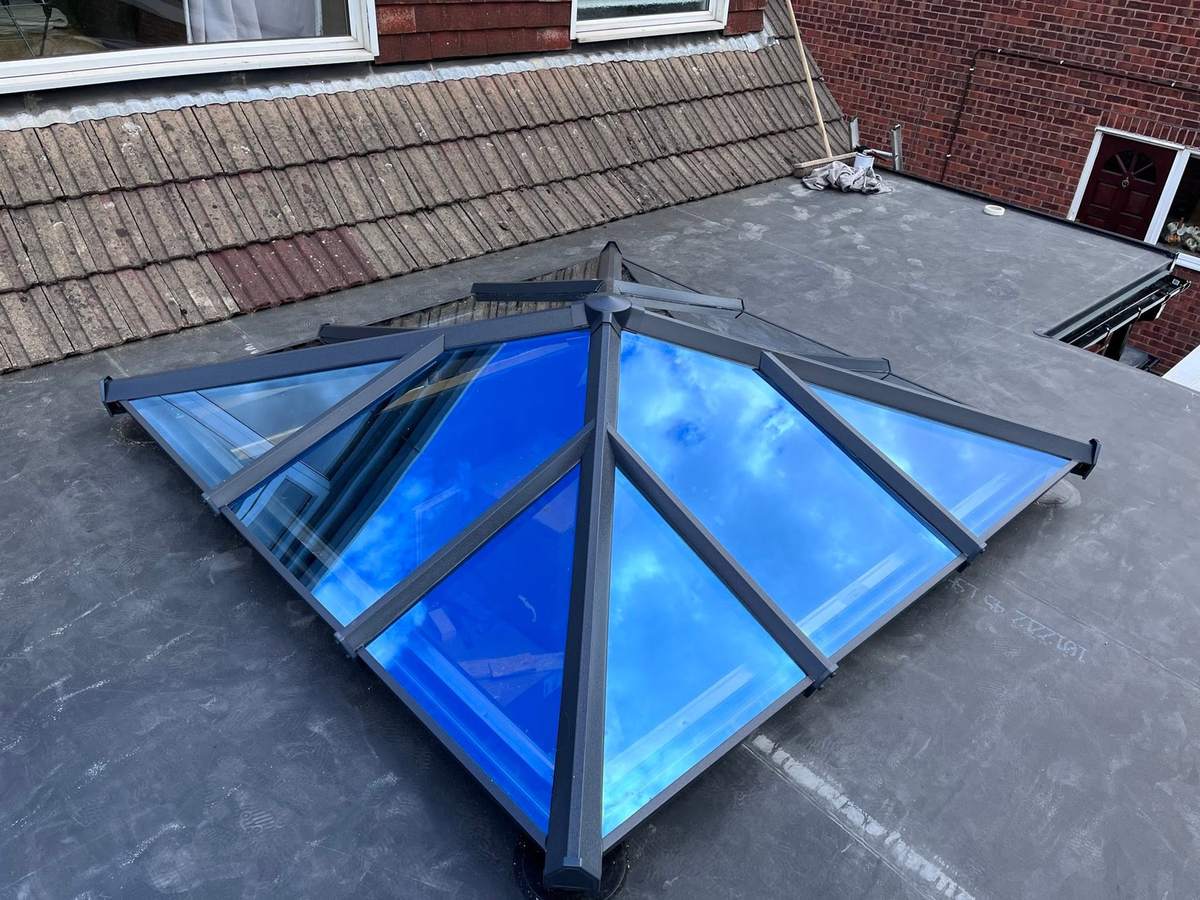
The two jobs on this page show the usual choice. One is anthracite grey with blue tinted glass, the other white with clear glass. Grey frames tend to go with grey window frames and bifold doors, and white with white. If you have new bifold or sliding doors in the same extension, matching the lantern to them ties the room together.
The glass matters more than the frame. A south facing lantern gets the sun all afternoon, and tinted solar control glass takes the glare and the heat down. A north facing one gets steadier light and can usually take clearer glass. Kitchens bring steam, so think about how the room is ventilated: some lanterns can be ordered with an opening vent.
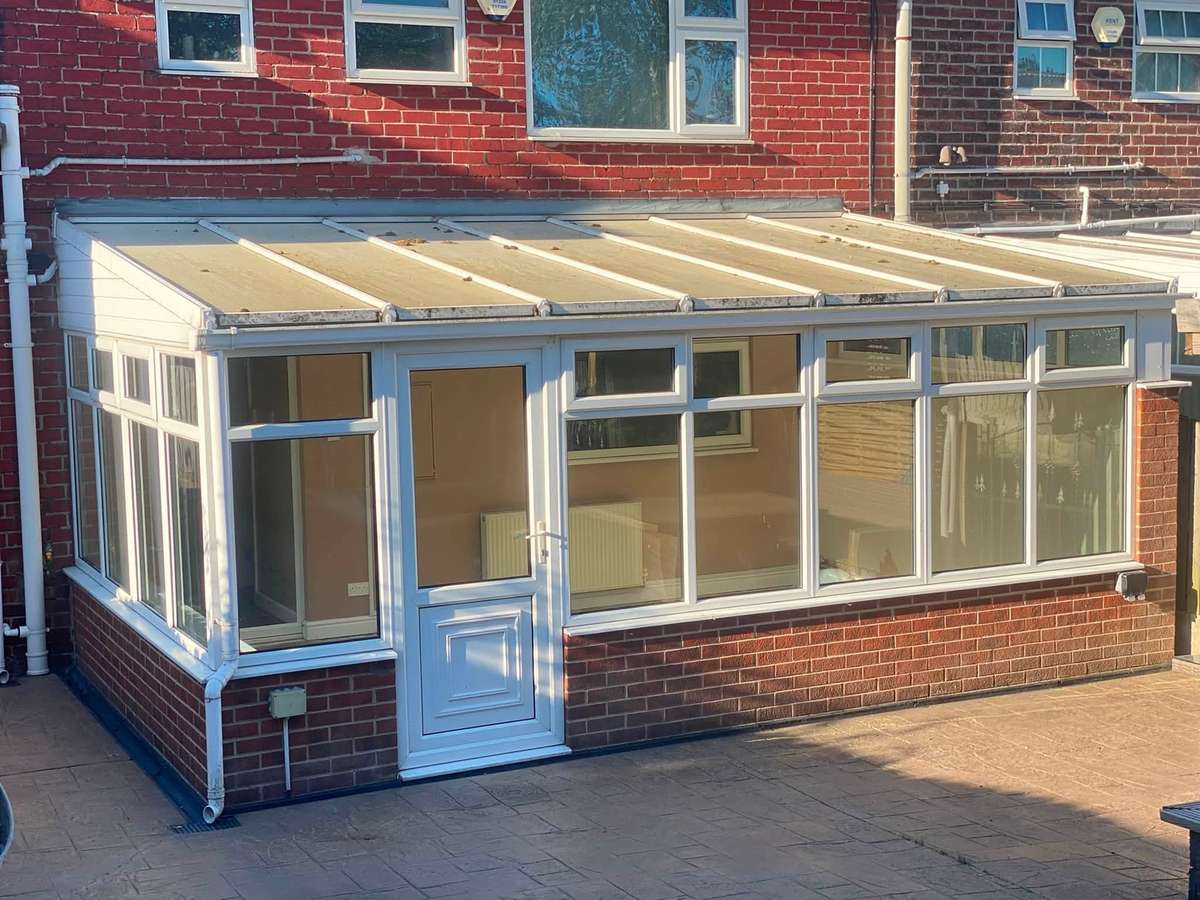
If your extension is not a flat roof at all but an old conservatory, the answer is probably a conservatory roof replacement, and a lantern can be built into the new solid roof for light. If you are starting from scratch, see new conservatories and garden rooms. Or ring Luke and Dale on 07487 719666, say what the room is like now, and they will come out, measure up and give you a price.