Do you need to replace every window at once?
No. Plenty of people assume a window firm only wants the whole house. Luke and Dale do single windows, a floor at a time, or every window in one go, and a house done in stages can still look like one job if the style is matched.
Is it the window, or only the glass?
Before anyone quotes for new windows, it is worth knowing which of yours have actually failed. Mist trapped between the panes is a glass fault, and a new sealed unit in the old frame fixes it for far less. Rot, a twisted frame or a sash that refuses to close is the window itself. There is more on the glass side in the misted glass section.
Which window style suits your house?
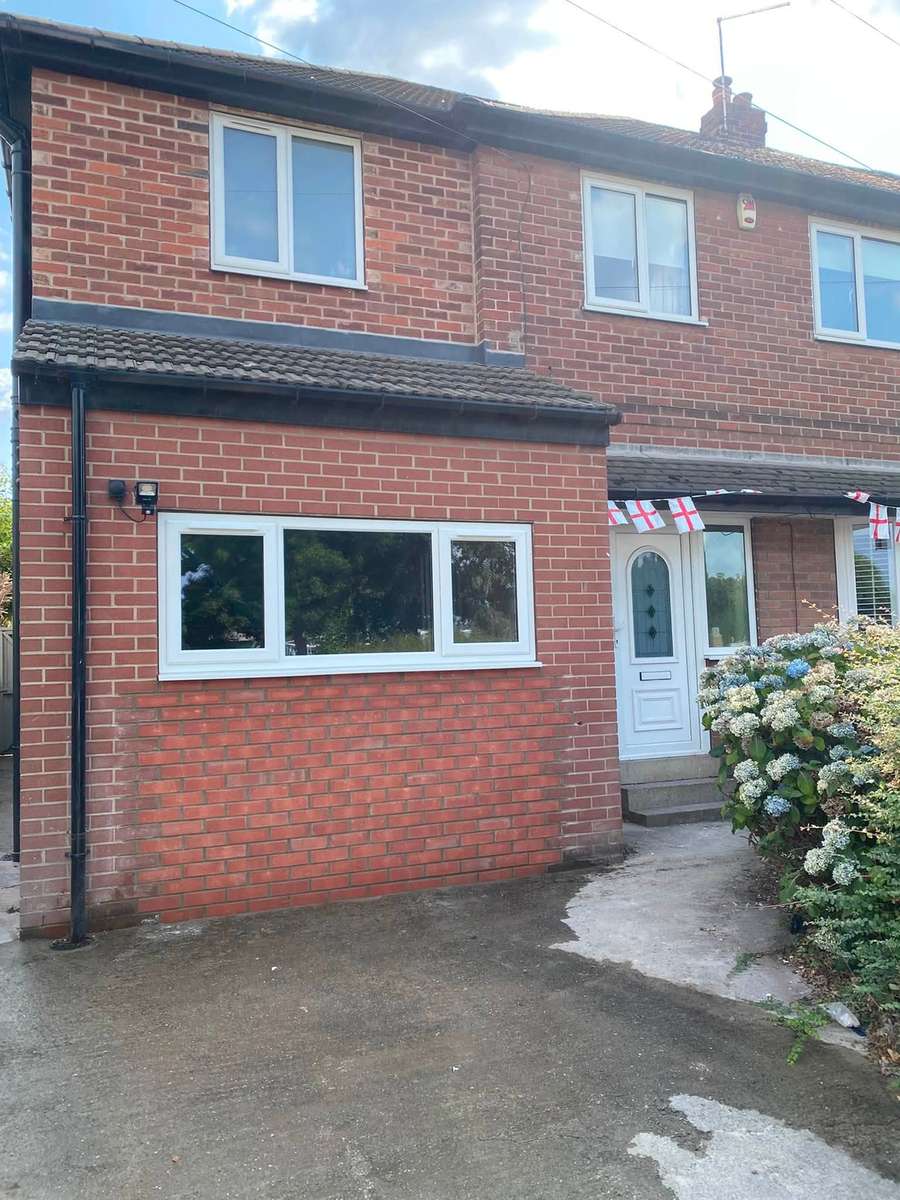
Most of the houses in Barnsley and Rotherham are brick or stone semis, terraces and bungalows, and the style that looks right is usually close to what the house was built with.
- Casement windows open on side hinges like a door. They are the standard on most post war houses, simple and reliable.
- Top openers hinge along the top edge. A good choice for a bathroom or a room where you want air in without a wide open window.
- Bay and bow windows stand out from the wall. A bay has flat faces set at angles, and a bow is a gentler curve. Replacing one properly means making sure the roof over it and the structure under it are sound, so it is worth having both looked at before you order.
- Georgian bars split the glass into smaller panes. They suit older and cottage style houses, and they can be matched to a front door with bars in it.
uPVC or aluminium windows?
Most houses round here have uPVC, and for good reason. Aluminium costs more and earns it in particular places. Luke and Dale fit both, and the right answer depends on the house, not on which one pays more. The same choice comes up with bifold and sliding doors, where aluminium really comes into its own.
What does an energy rating tell you?
Every new window comes with an energy rating on a scale that runs from A++ down to E, like the label on a fridge. It sums up how much heat the whole window keeps in, frame and glass together, over a year. The difference between a new A rated window and a single glazed or first generation double glazed one is something you feel in the room the first winter.
Three things do most of the work: the glass has an invisible coating that reflects heat back into the room, the gap between the panes is filled with a gas that slows heat down more than air, and the frame has several sealed chambers inside it. Ask about the rating when you get a quote, from anyone. One of Luke and Dale's customers said they explained the options for safety, security and energy efficiency before quoting, and that is the right order to do it in.
Doing other work on the house? Put the windows in first
If the windows are part of a bigger job, the order matters. Taking an old frame out almost always disturbs the plaster round the inside of the opening, so new windows want to go in before the plastering and decorating, not after. The plasterer then finishes the reveals up to the new frames and the job looks clean.
The same goes outside. Render, cladding and new sills should be finished up to the new frames rather than the frames squeezed into finished walls. On an extension, the windows go in once the openings are built and the roof is on, so the room can be made weathertight and the trades inside can get going.