
Whether a bifold feels cold comes down to four parts: the frame, the glass, the seals between the panels and the threshold. So are bifold doors cold? Not when all four are right. A thermally broken aluminium or good uPVC frame, modern double glazing, tight seals and a threshold that suits the wall make a set that should not feel cold. The ones that do usually fail on one of those four, and old sets fitted before frames improved fail on several.
Knowing which part is letting you down is how you avoid buying a cold set, or work out why the doors you already have feel like an open window in January.
Why bifolds got a cold reputation
Mostly from three things people have seen or felt. A wall of glass looks cold, and on a grey winter evening it can feel cold to sit next to, even when the glass is doing its job. Early aluminium doors, from before the frames were built to stop heat running through the metal, really were cold: the inside of the frame could be as chilly as the patio, and it ran with condensation. And a bifold has more joints than a patio door. Every panel has to seal against the next one, and every one of those edges is a place for a draught if the seals are poor or the doors have dropped out of line.
None of that is true of every set. It is true of a cheap set, a badly fitted set, or one that is twenty years old.
Where does a bifold door actually lose heat?
- Through the frame. Aluminium is a very good conductor of heat. Without a barrier built into the frame, warmth from the room travels straight through the metal to the outside.
- Through the glass. The biggest surface by far. Its performance depends on the coating, the gas between the panes and how many panes there are.
- At the edge of the glass. The spacer bar that holds the panes apart runs round the edge of every unit, and a metal one is a cold line round each panel.
- Between the panels. Where the doors meet when they are shut. This is where most draughts come from.
- At the threshold. The strip along the floor that the doors close onto. Lower looks better, but it gives the seal less to work with.
What is a thermal break, and do aluminium bifolds need one?
Yes, and any aluminium bifold sold for a house today should have one. Aluminium carries heat more than a thousand times as readily as PVC: published figures put aluminium at around 215 W/mK and PVC at around 0.19. Left as one solid piece of metal from the kitchen side to the garden side, an aluminium frame would act like a radiator fin, pulling heat out of the room.
A thermal break solves that by splitting the frame in two. The inner and outer aluminium sections are joined by strips of a low-conductivity material, usually polyamide, so heat has to cross the strip to get out. The inside of the frame then stays close to room temperature, which is what stops it feeling cold to touch and stops water forming on it.
Some systems have wider or more elaborate breaks than others, and they perform better for it. You do not need to know the engineering. You only need to know that the break is there, and to compare the whole-door figure described further down.
uPVC bifolds do not need a thermal break in the same way, because the plastic itself is a poor conductor and the frame is made up of chambers of trapped air. That is part of why uPVC is a sensible choice for a smaller opening. Across a wide span, aluminium is still usually the better frame, as the bifold and sliding doors page sets out.
How much difference does the glass make?
A lot, because the glass is most of the door. Three things decide how warm it is.
The coating. Modern double glazing has an invisible low-emissivity coating on one pane, which bounces warmth back indoors rather than letting it escape. Older units without it are noticeably colder.
The gas. Argon usually fills the space between the two sheets of glass, which slows heat crossing the gap better than air does.
The spacer. A warm edge spacer, made of plastic or a composite rather than plain aluminium, keeps the edge of the glass warmer. That matters on a bifold, because a set of five or six panels has a great deal of edge.
Triple glazing is available on many systems. It makes each panel heavier, which affects how wide each panel can be and how the doors run.
Are the seals between the panels the weak point?
They can be. When a bifold is shut, each panel presses against the one next to it, with a rubber gasket squeezed between them. If the gaskets are good and the panels line up, that joint is as tight as any other part of the frame. If the gaskets are cheap, or have gone hard with age, or the doors have dropped so the panels no longer meet squarely, you get a thin line of cold air you can feel with the back of your hand.
Two things keep this right. The first is a system with proper double seals at each meeting point. The second is the fitting. Bifolds are heavy, and they hang from or run along a track, so the opening has to be square and level and the doors adjusted carefully once they are in. A beautifully made set fitted out of square will draught.
Does a flush threshold make bifold doors colder?
It can let more weather in, which is not quite the same thing. A threshold sitting almost flat with the floor is lovely to walk over, and it is what most people picture. But the lower it is, the less of an upstand there is for the bottom seal to close against, and the more exposed it is to rain driven in by the wind.
On a patio that is sheltered, under a canopy or tucked into the corner of an extension, a low threshold is usually fine. On a wall that takes the full force of the weather, a slightly raised threshold with a proper weather seal will keep the doors tighter and drier, and you will not notice the small step after the first week. The right answer depends on your wall, which is one reason to have the opening looked at in person rather than ordering from a brochure.
How can you compare how warm two sets of bifold doors are?
Ask for the U-value of the whole door, not just the glass. The U-value measures how much heat passes through, so a lower number is a warmer door. Sellers sometimes quote the centre-pane figure for the glass on its own, which is usually better than the figure for the door as a whole, because it leaves out the frame, the edges and the joints.
Many good systems come in at 1.4 W/m²K or below, so a figure well above that is worth questioning.
Why do old bifold doors feel so cold?
If your bifolds went in a long time ago, any of these could be the reason:
- The aluminium frame has no thermal break, or a very narrow one.
- The glass predates modern coatings, or the seal on a unit has failed and the gas has gone.
- The gaskets have shrunk and hardened, so they no longer press tight.
- The doors have dropped on their hinges or track, leaving gaps where the panels meet or at the top.
- The threshold is worn, or was always too low for the wall it is on.
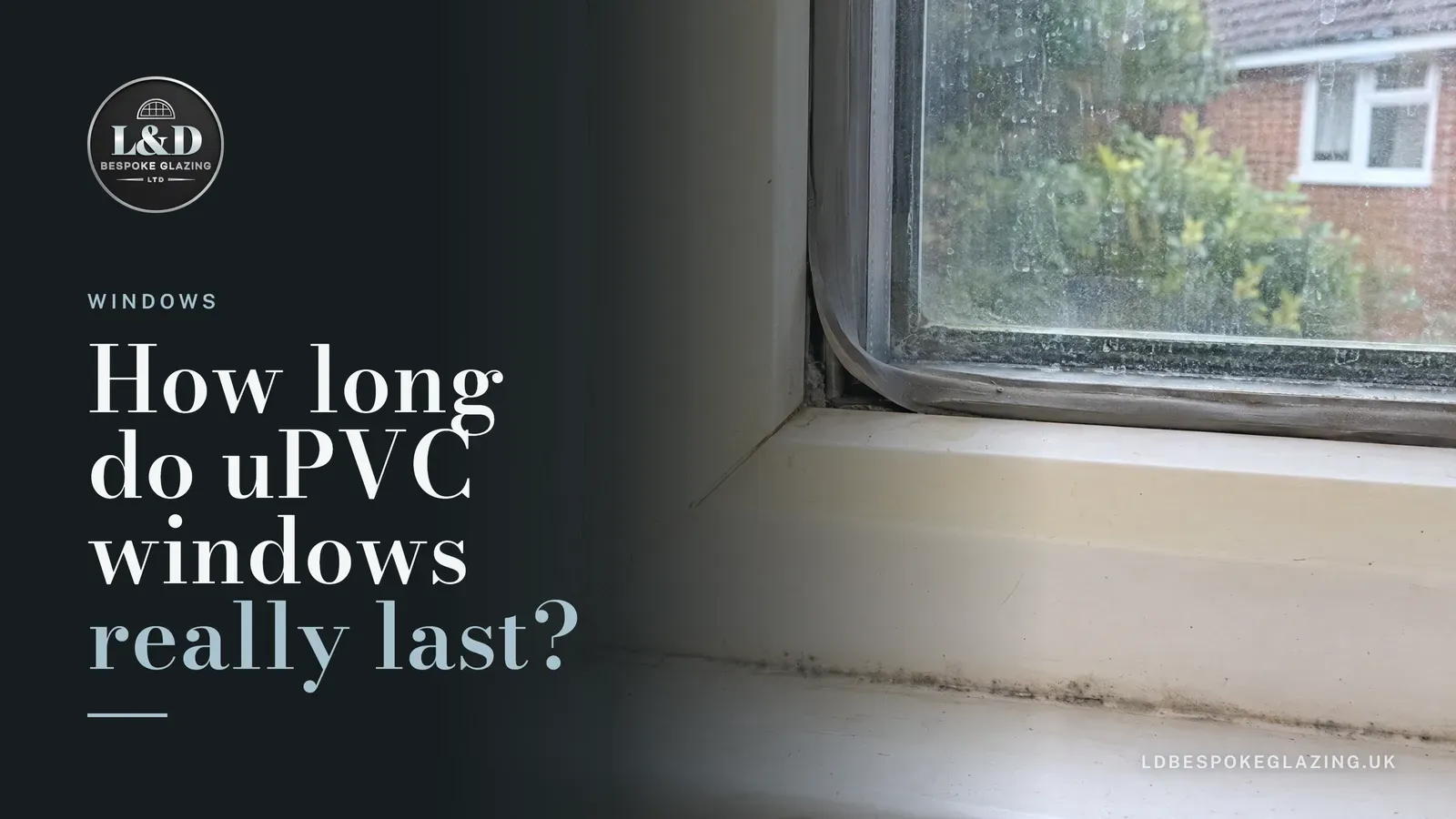
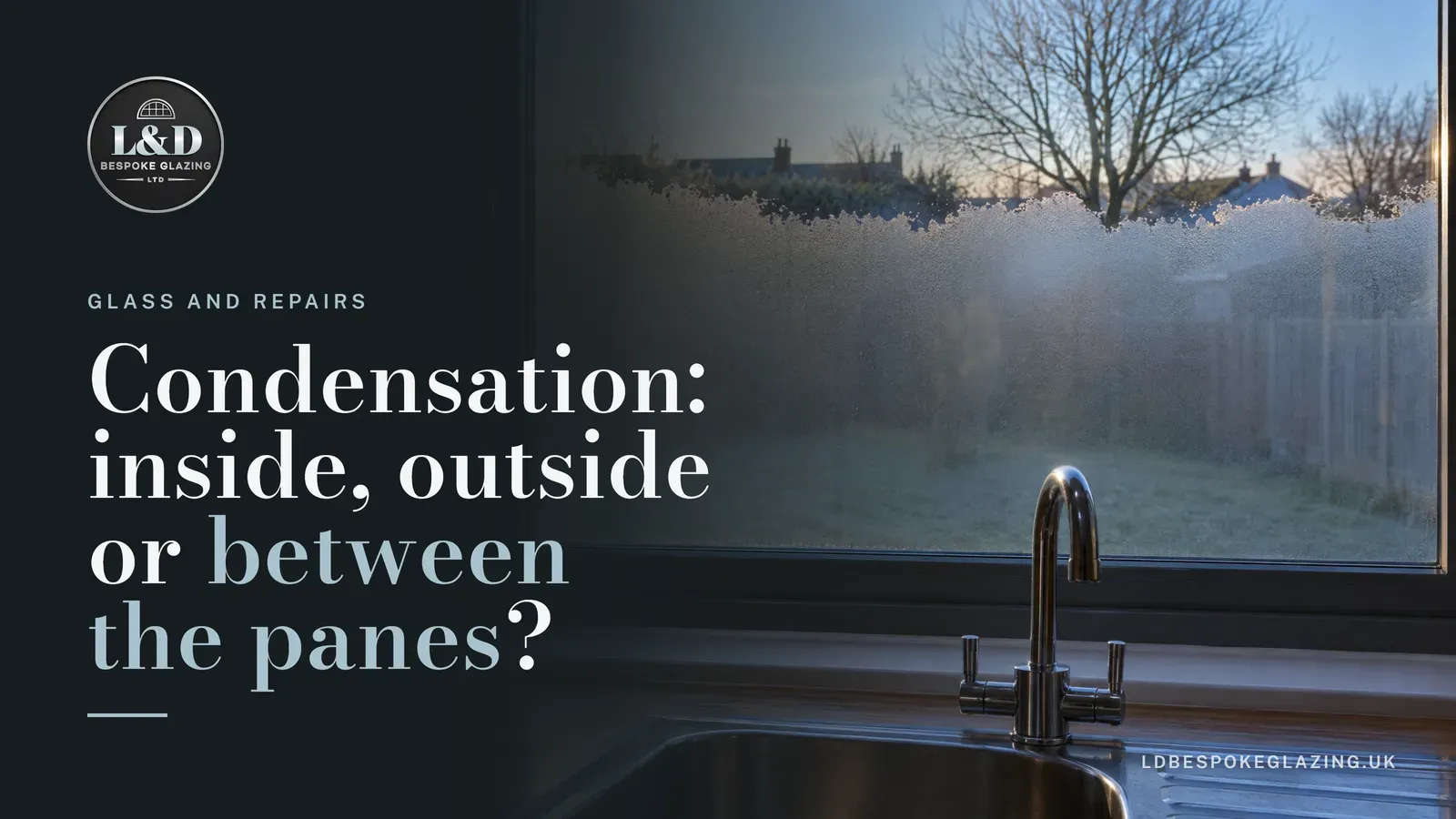
Water running down the inside of the frame on frosty mornings is a strong sign of the first one. If a single panel has gone misty between the panes, that unit has failed, and a new sealed unit can usually go into the existing frame; see misted glass replacement for how that works. Where the frame itself is the cold part, no amount of adjusting will change it, and that is when a new set is the real fix.
Are bifold doors cold on a north facing wall?
For cold, it matters less than people fear. A north facing wall gets no winter sun, so the glass never gets the free warmth a south facing set does on a bright January afternoon. But a good set loses heat at much the same rate whichever way it faces. What changes more is exposure. A wall that catches wind and rain across open ground puts more strain on the threshold and the seals than a wall in the shelter of the neighbours. That is the case for spending on the weather seal, not for avoiding bifolds.
What should you ask before you buy bifold doors?
- Is the frame thermally broken, and what is the U-value of the whole door?
- Does the glass have a low-emissivity coating, argon fill and warm edge spacers?
- How do the panels seal against each other when they are shut?
- What threshold is right for this wall, given how exposed it is?
- Is the opening square and level enough to take the doors as they are, or does it need work first?
- Who fits them: the people who measured, or a subcontracted team?
A firm that can answer all six without sending you to a leaflet is a firm that knows the product.
Luke and Dale fit both aluminium and uPVC bifolds, working out of Hoyland and mostly in Barnsley and Rotherham. Fifteen years on the tools, with a firm of their own since April 2026. One visit covers the measuring and the talking through, and the two of them do the fitting. Thinking about bifolds, or fed up with a set that lets the cold in? Ring 07487 719666.