
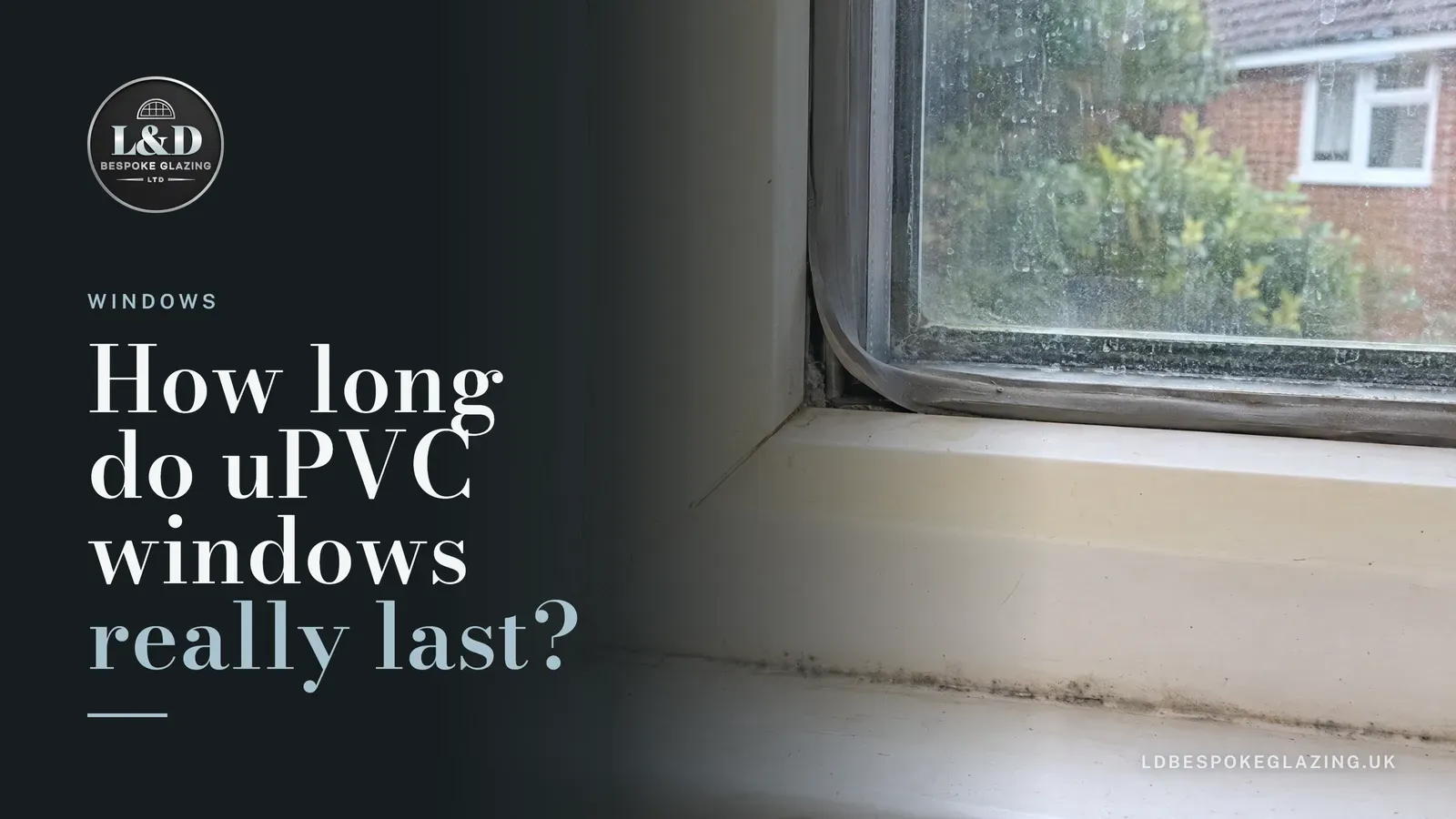
Maybe the bedroom window has started whistling when the wind gets up, or the one in the kitchen needs a shoulder against it before the handle will go down, and you're wondering whether it's time for new ones. So, how long do uPVC windows last? A good frame lasts a long time. Building guidance puts the expected life of uPVC windows made to the British Standard at around 40 years, with a predicted service life of more than 25. In real life the frame usually outlives the bits fitted to it, because the seals, hinges, handles and glass units wear out first, and most of those can be replaced. A window is finished when the frame itself is failing, not when one of its parts gives up.
That's why the age of your windows matters less than you'd think. The more useful thing to work out is which part has gone, and whether it can be changed.
How long do uPVC windows last in a real house?
Those figures come from Greenspec's guidance on window durability, which bases them on windows made to BS 7412, the British Standard for uPVC window frames. They're a fair guide for a decent frame that was fitted properly, but real windows spread out either side of them, and there are a few reasons why.
The first is the frame itself. Thicker, better made profiles with proper steel reinforcement inside hold their shape for far longer than thin, cheap ones, and you can often feel the difference just by opening and closing them.
Then there's the fitting, which matters as much as the product. A frame that was packed, fixed and sealed properly will sit square for decades, whereas one that was forced into an opening, or left without proper support underneath, can start to twist within a few years.
Where it faces makes a difference too, since a window that takes full sun and weather all day works a lot harder than one tucked away on a sheltered wall. And how it's been looked after counts for more than people expect, because a little care once a year (there's a short list further down) keeps the moving parts going far longer.
A lot of houses had their first uPVC windows put in during the 1980s and 1990s. Those frames are now somewhere between about 25 and 45 years old, which is exactly the age when people start asking this question.
What wears out first on a uPVC window?
Hardly ever the uPVC. The British Plastics Federation, the trade body for the plastics industry, says faults on uPVC windows usually turn up in the operating mechanism or the seals, and that how a window performs over the long run depends on the parts fitted into the frame rather than the frame itself. Roughly in the order they tend to go, this is what to keep an eye on.
The rubber seals
The gaskets that seal the opening part of the window against the frame are expected to last at least ten years. As they harden and shrink, the window starts letting in draughts and noise even when it's shut and locked, and you might see the rubber pulling away at the corners.
The hinges
Lots of uPVC casement windows open on friction hinges, which are meant to hold the window wherever you leave it. Once they wear, the window drops, catches on the frame as you close it, or swings shut on its own in the wind.
The handles and locks
If the handle turns but the window doesn't lock, or you need to give it a shove before the handle will go down, it's usually a worn locking mechanism or a sash that's dropped. A window that won't lock lets the cold in and leaves the house less secure, especially downstairs, so it's worth getting sorted quickly rather than living with it.
The glass units
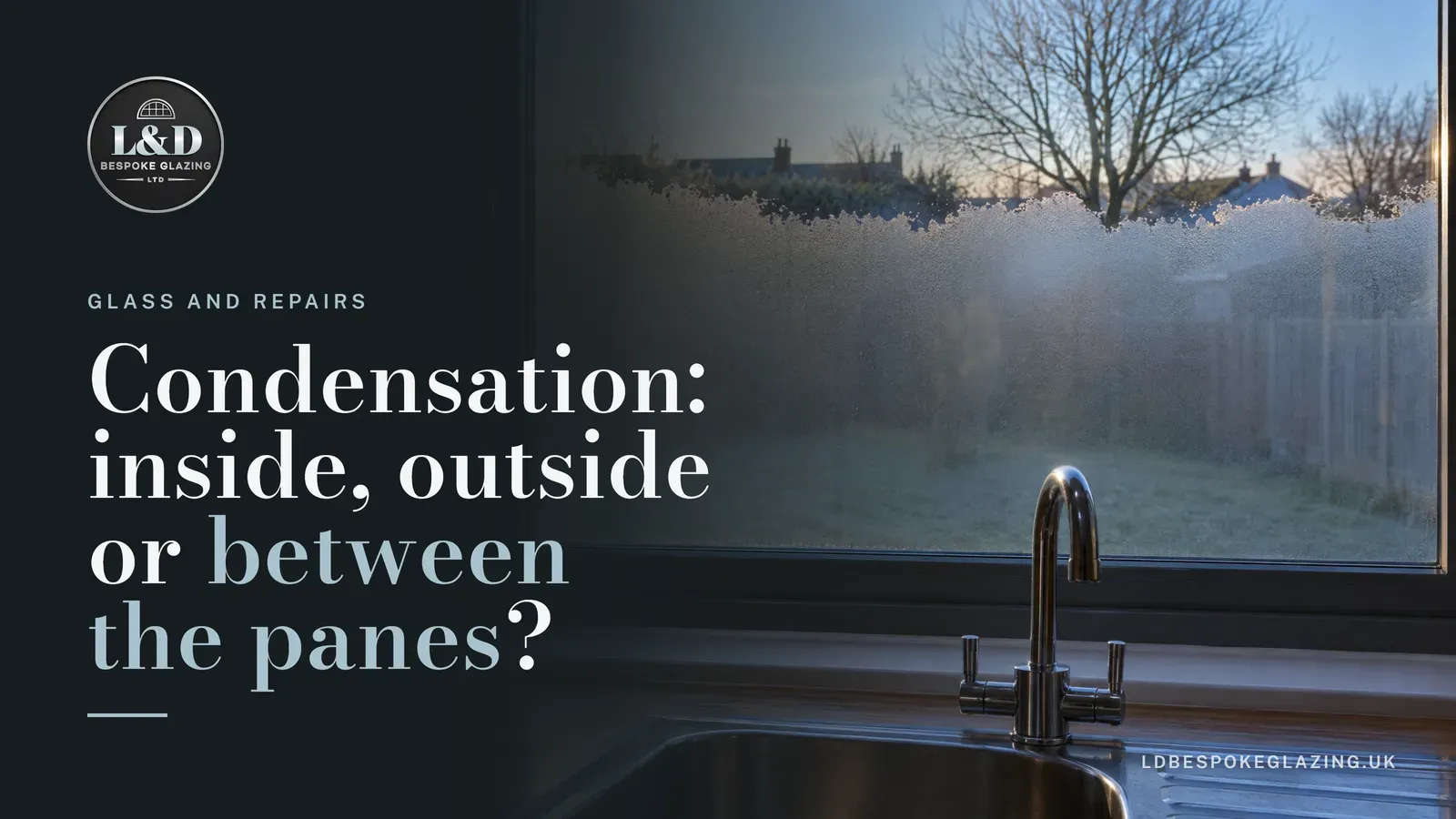
Greenspec gives sealed glass units an anticipated life of 25 to 30 years in frames that are properly drained and vented. Units sitting in frames that hold water, and older units generally, can fail well before that, and you'll know when one has because there's mist trapped between the panes that you can't wipe off from either side.
The seal around the outside
The bead of sealant between the frame and the wall outside weathers and cracks over the years. When it goes, rain can work its way in around the frame rather than through it, and that's often the first you know of it, with a damp patch on the plaster inside.
Which parts can be replaced?
Nearly all of them. Gaskets can be changed and hinges and handles swapped, locking mechanisms can be replaced, the outside sealant can be cut out and redone, and a misted glass unit can be replaced on its own inside the existing frame. On a frame that's still sound, that's often money well spent, and it can give a window years more life.
The one thing you can't fix with parts is the frame. No amount of new hinges and gaskets will save a frame that has twisted, cracked or lost its strength, because every one of those parts relies on the frame being square to work properly.
What are the signs a uPVC window is finished?
These are the things that point to the frame itself, rather than a part, being the problem.
- The sash won't close evenly, even after the hinges have been adjusted or replaced, which tells you the frame has gone out of square.
- The corners have cracked where the lengths of frame are welded together.
- Rust stains are running from the drainage slots or the corners, a sign that the steel reinforcement inside the frame is corroding.
- The frame is badly discoloured or brittle, rather than just dirty. Early uPVC in particular can yellow and turn chalky after decades in the sun.
- Several windows are failing at once, with misted units, draughts and stiff handles right across the house. One fault is a repair, but a house full of them is a pattern.
You'll notice age isn't on the list. A thirty year old window that opens, closes, locks and keeps the weather out is doing its job, and there's no reason to rip it out for the sake of it. Even so, a frame from the 1980s or early 1990s is unlikely to match a new window for glass, security or ventilation, and for some people that's reason enough to change it even though it still works. The replacement windows page explains what a modern window's energy rating means, if you want to compare.
How do you make uPVC windows last longer?
Most of this takes ten minutes a window, once a year, and it's the cheapest way to put off the day you need new ones.
- Wash the frames with warm soapy water and a soft cloth. Keep scourers, bleach and solvent cleaners well away, because they scratch and dull the surface.
- Clear out the drainage slots along the bottom of the outer frame, so any rain that gets past the outer seal can drain away instead of sitting in the frame.
- Put a drop of light oil on the hinges and the locking points along the edge of the sash once a year.
- Have a look at the sealant around the outside of the frame, and get it redone if it's cracked or come away from the wall.
- Don't force a window that's started to catch or stick. Find out why first, because forcing it is how a worn hinge turns into a broken one.
Repair or replace?
If it's one window with one problem and the frame is sound, repair it. If the frames are old, units are misting all over the house and the windows stay draughty however much they're adjusted, the sums usually tip towards replacing, because otherwise you end up paying again and again to keep frames going that will need replacing anyway. Before you decide, get a price for the repair as well as for a new window, so you're comparing real numbers rather than guessing. And if you're already having one or two replaced, ask about the rest, because the newer windows can be matched to the old style and the job can be done in stages.
If yours are past saving, new ones are what Luke and Dale do, measured and fitted, from a single window to a whole house, anywhere from Barnsley to Rotherham and further afield in South Yorkshire. Call 07487 719666 and one of them will come out to measure up and talk it through.