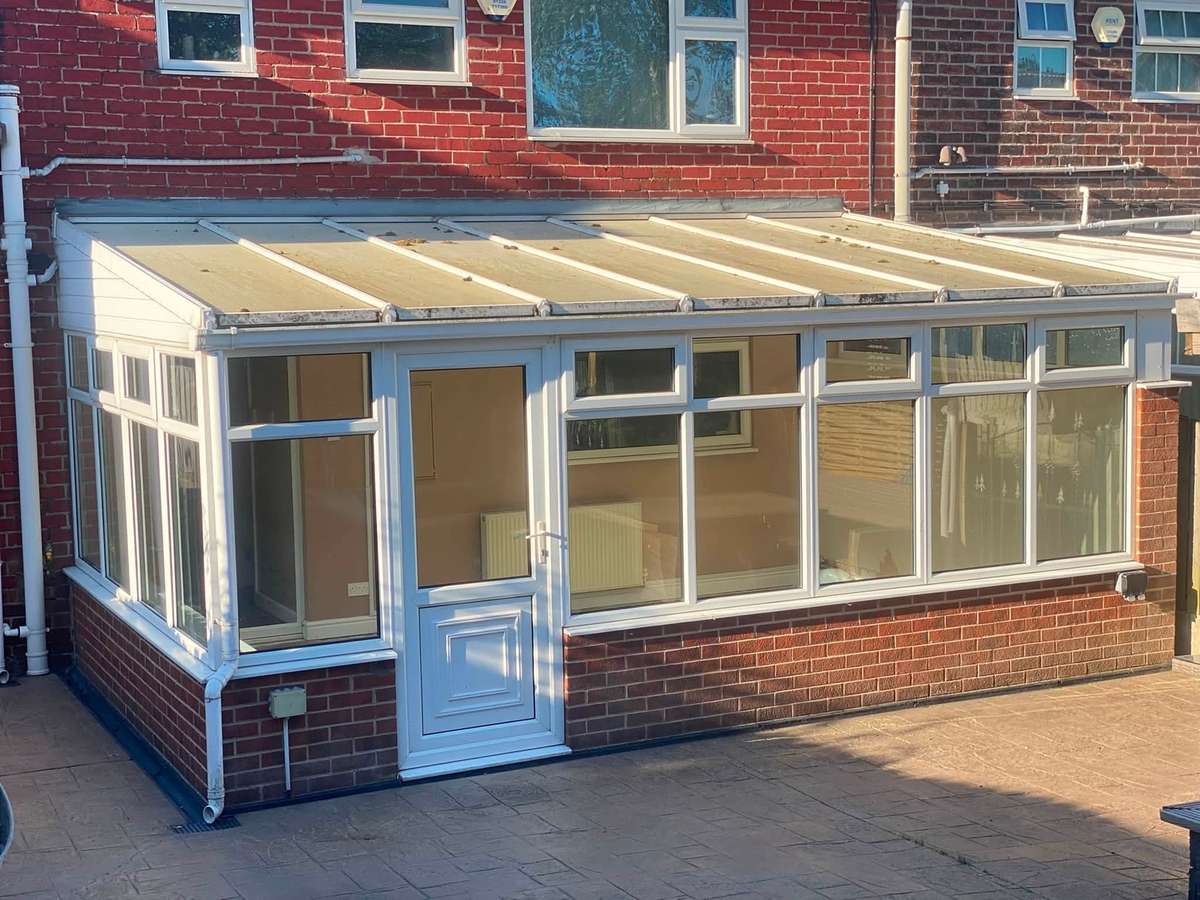

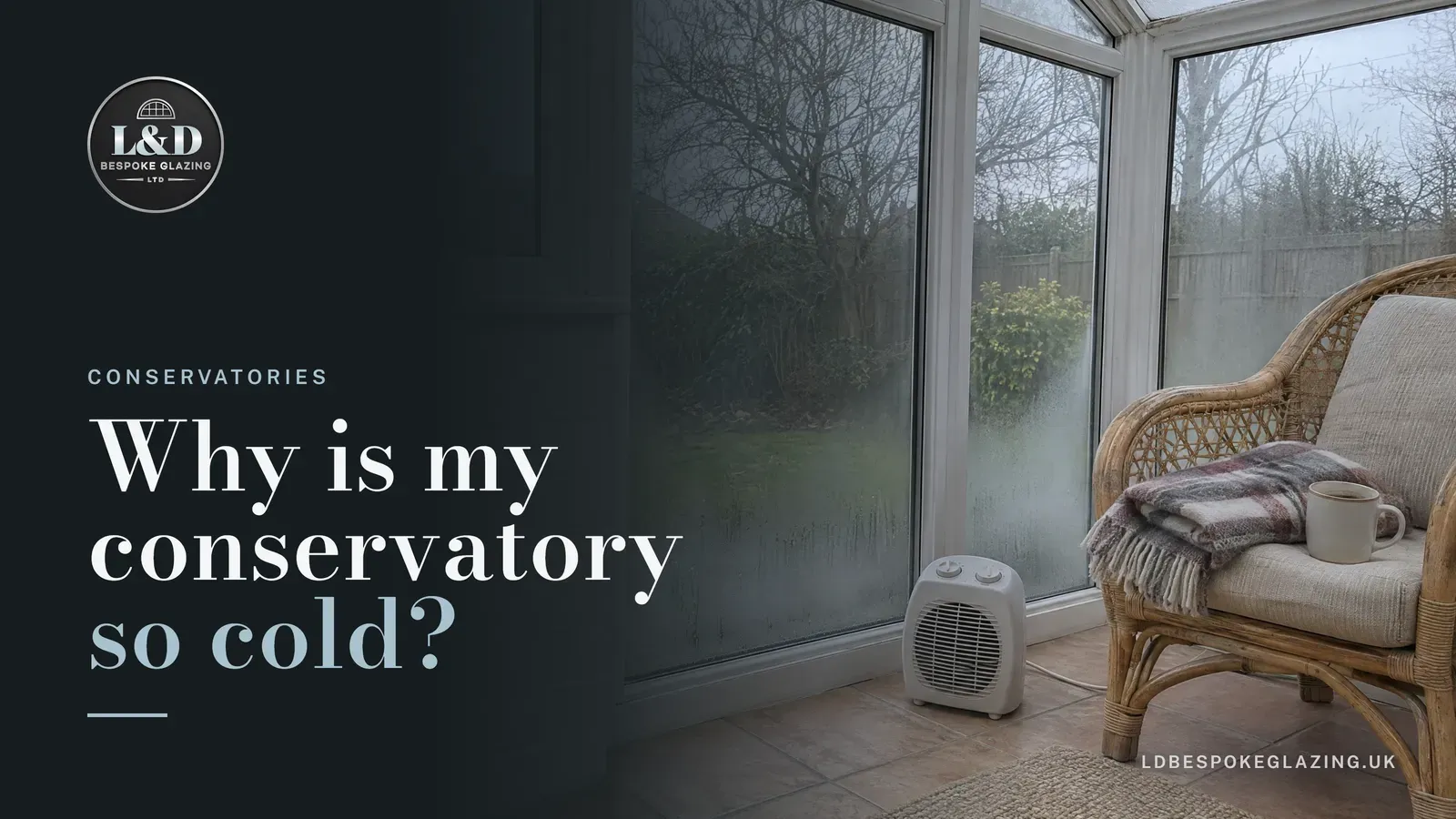
If you've got a conservatory you only really use from May to September, and by January it's where the Christmas boxes and the dog's bed end up, you're in good company. A cold conservatory is cold because nearly all of it is glass or thin plastic sheet, and the roof is the worst part of it. Warm air rises and goes straight out through the top, the floor draws heat away from underneath, and the gaps around the doors and joints let the wind in. A few cheap fixes will make the room far more usable, so they're worth trying first. But if the roof is old glass or polycarbonate, that's where most of your heat is going, and nothing else you do will change it.
It makes sense to tackle it in that order, starting with where the heat is actually escaping and finishing with the roof, because the cheap fixes cost so little that you may as well know what they can do before you spend real money.
Why do conservatories get so cold?
Mostly because they were never meant to be part of the warm house. By definition, a conservatory is a glass room kept separate from the home by external doors or windows. That separation is the reason most conservatories don't need building regulations approval, and it's also the reason they've never had to hold on to heat the way the rest of your house does.
Glass and plastic sheet let heat through far more easily than an insulated wall or roof, so in a room that's mostly glass on the sides and overhead, whatever heat you put in doesn't stay long. There's a second thing going on as well, and it's why the room feels worse than the thermometer says. Your body loses heat to the cold surfaces around you, so even once the air has warmed up, sitting next to cold glass under a cold roof still feels chilly. You end up in a jumper with the heater going full pelt, wondering why it isn't working.
It flips round in summer, too. The glass lets the sun's heat in and the roof holds it there, which is why so many conservatories are too cold to sit in come January and too hot to sit in come July.
Where is the heat in a cold conservatory actually going?
Start with the roof, because that's where the warmest air in the room ends up, and on most older conservatories it's also the thinnest part. That usually means polycarbonate sheets a few centimetres thick, or early double glazed panels without modern coatings, and neither does much to keep heat in.
The glass walls come next. If they're decent double glazing they're a lot better than the roof, but if the units are old or failing they're much worse, and the giveaway is usually a cloudy film inside the glass that no amount of wiping shifts.
Then there's the floor. Most conservatories sit on a concrete base under tiles, often with very little insulation beneath it, so the floor draws heat steadily out of the room and stays cold underfoot, which is the first thing you notice when you walk in wearing socks.
Last come the gaps. Worn seals on the doors, the joint where the roof meets the house wall, and joints that have moved a little over the years all let warm air out and cold air in. On a windy day you can usually find them by holding the back of your hand near the frames.
What can you do about it without building work?
Quite a lot, and very little of it costs much. None of these will turn a conservatory into a warm room on its own, but together they can make it usable on far more days of the year than it is now.
- Close the doors between the conservatory and the house. It feels backwards, but leaving them open just lets the house's heat pour into the conservatory and out through the roof, so treat it as its own space and heat it when you're actually in there.
- Deal with the draughts. Replace worn seals on the doors, and look for gaps where the roof meets the house and where the frames sit on the dwarf wall. Draught strips are about as cheap as home improvements get.
- Fit blinds under the roof. They hold back a bit of heat at night and cut the glare and heat in summer, so they earn their keep in both seasons, even though they aren't insulation.
- Close curtains or blinds over the glass walls as soon as it gets dark, so the warmth stays away from the coldest surfaces in the room.
- Put a thick rug down over cold tiles. It helps more than most people expect, because the floor is the part of the room you're actually touching.
- Use a heater with its own thermostat and timer, and run it when you're using the room. Trying to keep a glass room warm all day is a losing battle.
- Check the doors and windows close properly. A conservatory door that's dropped won't seal, however good the seals on it are.
North, south, east or west: does the direction make a difference?
More than you'd think. A north facing conservatory gets little or no direct sun, so it never gets the free warmth that makes a south facing one so pleasant on a bright winter afternoon. North facing ones tend to be cold for most of the year, and they're often the ones where a solid roof makes the biggest difference, because there wasn't much sunshine coming through the old roof to lose.
A south or west facing conservatory has the same winter problem plus one of its own. It still loses heat through the roof on winter nights like any other, but on a sunny day it can go from cold to far too hot in a few hours. Roof blinds and good ventilation matter most here, and if the roof is being replaced with glass, solar control glass is well worth asking about.
Can you put heating in a conservatory?
You can, but there's a condition attached, and it catches people out. The Planning Portal, which publishes the government's guidance on these rules, says a conservatory is normally exempt from building regulations when, among other things, it's kept apart from the house by doors or windows of external quality and has an independent heating system with its own temperature and on/off controls.
In plain terms, you heat the conservatory as a separate space with its own controls, rather than adding it to the house's heating as one more room. The same guidance says any new structural opening between the conservatory and the house needs building regulations approval, so knocking through to make it open plan with the kitchen is a bigger job than it looks. If what you really want is a room you can heat and use like any other, all year round, you're probably after an extension, and the rules treat it that way.
Will new glass make it warmer?
Sometimes. If the walls are double glazed but the units are old or have started to mist, swapping them for modern units keeps more heat in and cuts down on condensation without touching anything else. Units that have misted up inside can usually be replaced on their own, and the misted glass replacement page explains how that works.
The roof is a different matter. A modern glass roof is far better than old polycarbonate sheet, and you keep all the light. But it's still a glass roof, so the room will still lose heat through it in winter and gain heat through it in summer, just less of both.
When is the roof the real answer?
When you've done the cheap things and the room is still unusable for months at a time. If the roof is polycarbonate or old glass, it's almost certainly where most of your heat is going, and swapping it for a solid, insulated, tiled roof changes how the room behaves more than anything else you can do, while everything under the roof stays as it is. A solid roof does need building regulations approval, because it changes what the structure is, and the conservatory roof replacement page goes through what's involved and how the options compare.
If the base, the walls or the frames are on their way out as well, a full rebuild might be the better use of the money, and the page on new conservatories and garden rooms covers that.
Luke and Dale replace conservatory roofs in Barnsley, Rotherham and the towns around them. If yours has turned into the room everyone avoids from October onwards, give them a ring on 07487 719666 and they'll come round and have a look.