
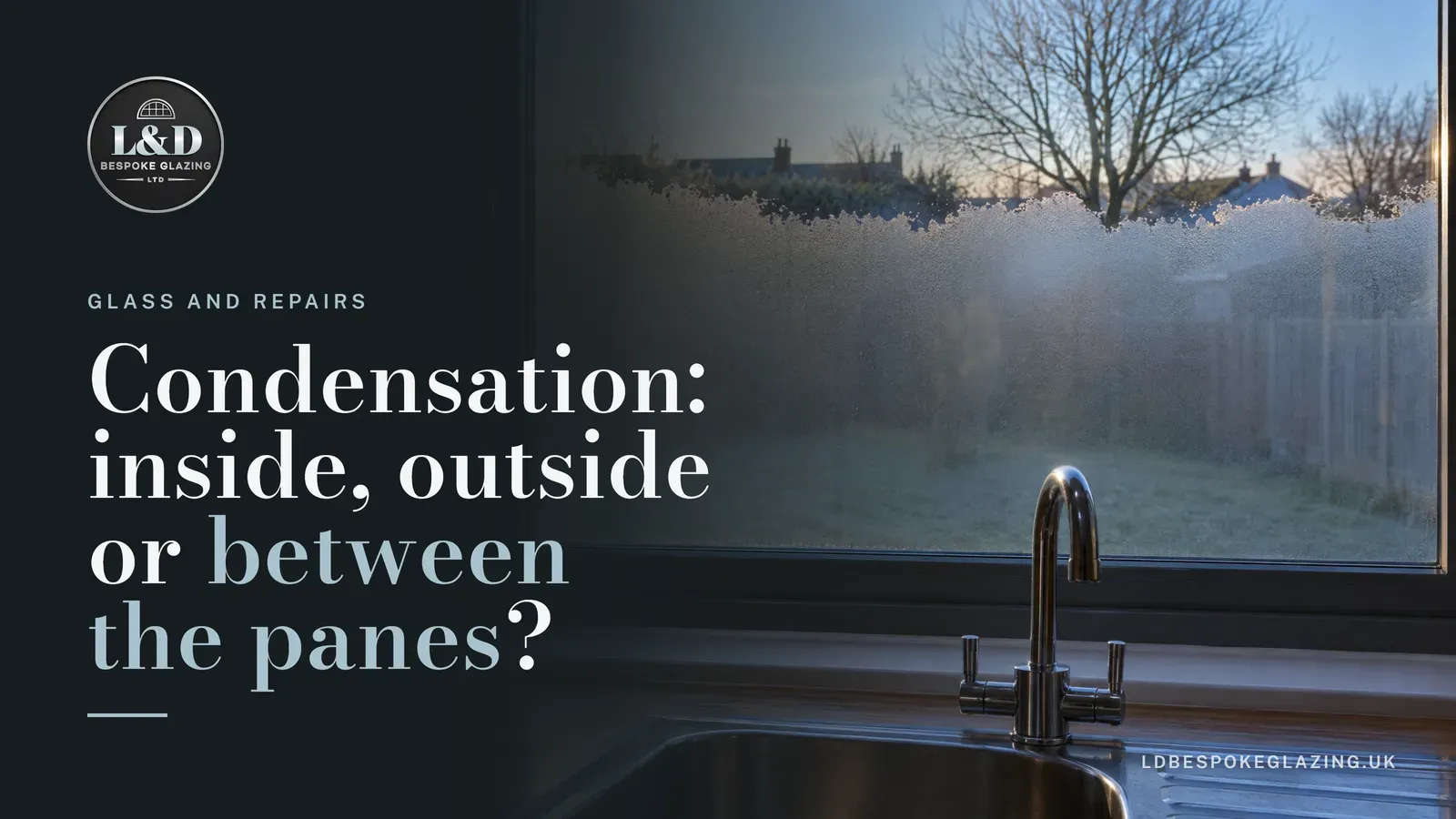
Condensation on windows means something different depending on where the water is. On the inside of the glass, it is moisture from the house meeting a cold surface, and the answer is mostly ventilation and heating, not new windows. On the outside of the glass, it is usually a sign your glass is insulating well. Between the two panes, the seal on that glass unit has failed, and that is the only kind of condensation that needs new glass.
Most of this article is about the first kind, because it is the one nearly every house gets in winter and the one you can do most about yourself, without spending anything.
Why do windows get condensation on the inside?
Air holds water as vapour, and warm air holds more of it than cold air. When warm, damp air touches a surface that is cold enough, it cannot hold all that water any more, and the extra comes out as droplets. In most rooms the coldest surface is the glass, so that is where it shows first.
The water comes from ordinary living. Council guidance on damp, quoting figures from the Building Research Establishment, puts the moisture an average household adds to the air at about 12 litres a day, from cooking, washing, bathing and simply breathing. Where clothes are dried indoors, it can be over 20 litres. All of it has to go somewhere, and if it cannot get out of the house, some of it ends up running down the windows.
That is why the pattern is so familiar. Bedroom windows are wet in the morning, because two people have been breathing in a closed room all night with the heating off. Kitchen and bathroom windows stream after cooking and showers. North facing rooms, which never get the sun on the glass, are worse than south facing ones.
How do you stop condensation on the inside of windows?
You cut the moisture, move it out, or keep the surfaces warmer. Usually it takes a bit of all three.
- Open the trickle vents. The narrow vents built into the top of most modern frames are there for exactly this. They let damp air out slowly without leaving a window open.
- Use the extractor fans, and leave them running. Run the kitchen fan while cooking and the bathroom fan during and after a shower, for longer than feels necessary.
- Put lids on pans and close the kitchen door while cooking, so the steam goes out of the fan, not round the house.
- Dry washing outside when you can. Indoors, use one room with the window open and the door shut, and make sure a tumble dryer is vented outside.
- Keep a steady low heat rather than letting the house go cold and then blasting it. Cold walls and glass are what the water condenses on.
- Air the bedrooms each morning, with the window open for a few minutes, and wipe the glass and sills dry so water does not sit there.
- Leave a gap behind furniture on outside walls, so air can move behind wardrobes and beds.
- A dehumidifier helps in a room that will not dry out, but it treats the symptom. It works best alongside the rest of this list.
Do new windows cure condensation?
On the glass itself, usually yes, there will be less of it. A modern double glazed unit keeps its inner pane much warmer than single glazing or an early sealed unit, so the glass is less often the coldest thing in the room. Older units also tend to stream around the edges of the glass, where the metal spacer bar between the panes conducts the cold through. Newer units commonly use warm edge spacers that cut that down.
But there is a catch worth knowing before you buy. Old, tired windows are draughty, and those draughts were quietly carrying damp air out of the house. New windows seal properly. If the trickle vents are then kept shut and nothing else changes, the moisture has fewer ways out, and it can move from the glass to the coldest corners of the walls and ceilings, where it is harder to see and grows mould. New windows and good ventilation work together. New windows on their own can simply move the problem.
Why is there condensation on the outside of my windows?
This one alarms people, and it should not. On a clear, still night, the outside pane of a well insulated window gets very cold, because so little heat from the house is getting through to warm it. Damp outdoor air condenses on it exactly as it would on a car windscreen. A study of highly insulating glazing by the Belgian Building Research Institute linked it to clear skies, low wind and a window with a wide view of the sky, and described it as a sign of good insulation rather than a fault.
It clears on its own once the sun or the day warms the glass. It is most common on new windows with modern coated glass, and on windows that face open ground. There is nothing to fix.
What does condensation between the panes mean?
Inside a double glazed unit, the gap between the panes is sealed all round and filled with dry gas. When the seal fails, damp air gets into the gap, and you get misting you cannot wipe off, often coming and going with the weather. The seal does not heal itself. The fix is a new sealed unit, which can often go into the existing frame, and the page on misted glass replacement explains how to tell whether it is the glass or the whole window that needs replacing.
When is condensation a sign of something worse?
A wet window on a cold morning is normal. These are not:
- black spots of mould on the window reveals, the frame or the wall around it
- timber sills or frames that have gone soft, dark or started to rot
- damp patches on walls away from the windows, or a tide mark low down on a wall
- a musty smell that does not clear when the room is aired
Mould is worth dealing with quickly. Government guidance on damp and mould, published in 2023, sets out that it can cause breathing problems and make conditions such as asthma worse. And damp that appears away from the windows may not be condensation at all. Water coming through a wall or up from the ground is a different problem, for a builder or a damp surveyor rather than a window firm. If you rent, the same guidance makes clear that dealing with the underlying cause of damp and mould is the landlord's job, not something to blame on the tenant.
When is it the windows?
Sometimes the honest answer is that the windows are part of the problem. Single glazing, early double glazing with failed or failing units, frames that no longer close tight, and windows with no trickle vents at all all make condensation harder to control. If that is your house, replacement windows with trickle vents and warm edge units are worth pricing, as long as the ventilation is sorted at the same time. If you are in Barnsley, Rotherham or anywhere else in South Yorkshire, Luke and Dale can look at the windows you have and price the ones you need. The number is 07487 719666.